
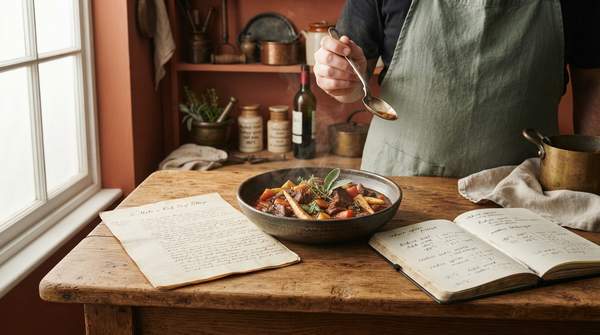
Adapting a historical recipe is less like following a recipe and more like translating a letter from a stranger. The old texts rarely give you measurements, the ingredients may no longer exist, and the finished dish was never meant to taste like anything you eat today. The cooks and scholars who do this work well agree on the essential approach: research before you cook, interpret rather than transcribe, and decide early whether you are chasing a historically "foreign" taste or a dish a modern guest will enjoy. Here is how those decisions actually get made.
The Scholarly Kitchen: Researching Historical Recipes
The real work of historical recipe adaptation happens before anyone turns on a stove. KC Hysmith, a recipe developer with training in literature, gastronomy, American studies, and history, describes research as a distinct and essential step: before she steps foot in the kitchen, she studies the source. The crucial difference from ordinary recipe development, she explains, is that she is often adapting a recipe that doesn't exist in usable form at all, or one that would be completely unrecognizable to a modern reader.
That research draws on more than one text. Hysmith's archival experience with culinary works ranging from the early 11th to the 20th century lets her weigh contextual nuances and make what she calls educated decisions about how to adapt. A single transcribed recipe is not enough; understanding requires consulting multiple texts and the historical context around them. The Rare Cooking project, which tests recipes from sources like Elinor Fettiplace's manuscript, shows the same pattern—recipe testing there is explicitly tied to ongoing research, with each recreation deepening understanding of period ingredients and even literary references.
There is also a physical skill involved. Many historical recipes survive only as handwritten manuscripts, and Hysmith credits her ability to parse multiple eras of cursive handwriting as a practical necessity when working with culinary manuscripts. For an enthusiast, the lesson is plain: expect the research phase to take longer than the cooking.
The Core Tension: Authenticity vs. Modern Palate
Every adapter eventually confronts the same question: should the dish taste the way it did then, or the way we want it to taste now? The Manuscript Cookbooks Survey takes a firm position. If your adapted seventeenth-century dish tastes just like a dish made today, you are probably not succeeding at your task—the dish should taste "foreign." By foreign, the writer means distinct rather than bizarre: very few seventeenth-century dishes taste bizarre to a sophisticated modern palate. The recommended posture is to embrace the strangeness of the period repertory as you would any foreign cuisine, and to let repeated attempts calibrate your sense of when you are on the right track.
Karima Moyer-Nocchi, who recreates historical dishes through her Eternal Table project, frames the alternative. Her approach, she writes, is "somewhat like arguments about the best instruments on which to play Early Music." Players of the past used the newest tools available, but early music concerts today exist to breathe new life into the music and create an enjoyable experience, not merely to elicit historical curiosity. Her aim is to interpret recipes through culinary knowledge and practical skill so they can be replicated by others with a simple home kitchen.
Her stated goal is a middle path she calls "gustatory verisimilitude": dishes that share the taste-character of the past without being "slavish archeological projects." Just as audiences appreciate Scarlatti played on modern instruments, she hopes her dishes bring the joy of good food while serving as a vehicle to travel back in time. Neither philosophy is wrong—they are different answers to the same question, and you should choose one deliberately before you begin.


