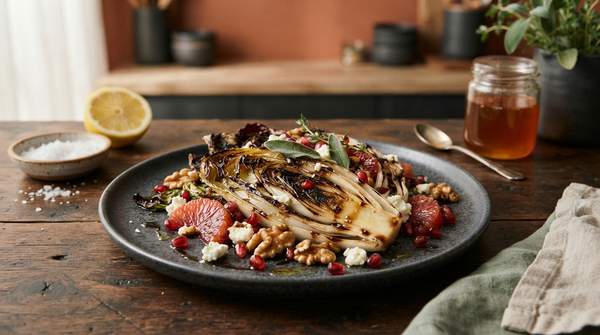
Bitterness is the flavor most home cooks reach for the sugar to kill — but the better move is to balance it. The reason we perceive bitterness at all is evolutionary: our tongues flag bitter compounds as potential danger. Yet the same taste that once warned us away from toxins is now what gives dark chocolate, grapefruit, coffee, and leafy greens their depth. Le Cordon Bleu's guiding principle is that each of the five flavors affects the others, and three agents — salt, sweetness, and sourness — are your primary tools for turning a harsh bitter note into a balanced one.
The Evolutionary Role and Modern Value of Bitterness
We taste bitterness because, for most of human history, tasting it kept us alive. Robin Dando, an assistant professor in Cornell University's Department of Food Science, explains that bitter-tasting things are often toxic, so sensitivity to bitter tastes was critical for the survival of the species. "Bitter things for the most part represent things that might be dangerous," he says. In taste science, bitter and sour are described as "aversive" — humans tend not to like them — while sweet, salty, and umami are "appetitive," the tastes we instinctively enjoy.
That ancient alarm system still shapes what ends up on our plates. As Joti Heir reports in Ambrook's agricultural coverage, because sweet and bland qualities are more readily accepted, bitterness and complexity are often bred out of crops in favor of mild-to-sweet flavors — bitterness in produce is frequently perceived as a flaw of the product rather than a feature. The irony is that this hardwired caution no longer serves cooks well. With a safe modern food supply, bitterness's survival role has faded, while its culinary role — providing contrast, cutting richness, and adding depth — has grown.
Beyond Masking: Embracing Bitterness in Cooking
The instinct to bury bitterness under sugar treats a flavor asset as a defect. Chef Jenny Dorsey, writing for the Institute of Culinary Education, makes the case against reflexively counteracting bitterness: bitterness is a critical component of building intensity and complexity of flavor, yet American cooks often shy away from using it to accentuate food. Her argument is not that you let bitterness run wild, but that you master the nuance of layering the flavor.
Le Cordon Bleu makes the same point from the kitchen side: though bitterness may not be the most popular flavor generally, it is critical to balance, because the taste of grapefruit, dark greens, or beer can cut through the richness or sweetness of a meal. In other words, a bitter element is not a problem to erase — it is a counterweight your dish may need. The goal of the techniques below is harmony, not elimination.