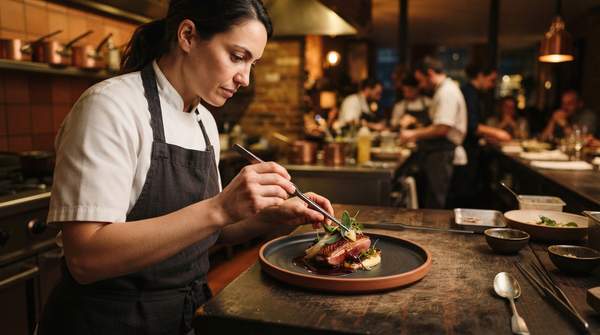
The prix fixe menu began as a workaround, not a statement. In the 19th century, when restaurants were still a new institution in France, feeding every guest the same meal at one fixed price was simply the most realistic way to run a kitchen with limited supplies and unsophisticated distribution. Today, the same format has been turned inside out: chefs adopt it deliberately to compose a curated experience, while restaurants lean on it for efficiency, predictability, and waste control. The menu's structure barely changed; its purpose transformed completely.
The Prix Fixe Menu: From Necessity to Culinary Artistry
Prix fixe is French for "fixed price," and in practice it means a multi-course meal offered at one set price, often with a few choices within each course. That definition has stayed stable for well over a century. What has shifted is the reason a restaurant would choose it. As Scott Schulfer, writing on restaurant management, puts it plainly: "The birth of the set menu wasn't to deliver curated experiences. It was to cost-effectively serve groups."
Over time, food distribution grew more robust and à la carte menus gained popularity, and the set menu drifted from being a logistical default to being a canvas. The same writer observes that these "old world beauties became as much or more about chef-driven experiences than they did about making life easier for restaurants." That single sentence captures the whole arc of this story: a tool of necessity gradually repositioned as a tool of expression.
For diners, the format has taken on a different meaning too. A contemporary guide from Rene at Tlaquepaque, a Sedona restaurant, describes the moment a server presents a prix fixe menu: there is "less guesswork, more intention, and a quiet sense that the meal has been composed rather than assembled." The modern diner is invited to accept curation rather than surrender choice.
19th-Century Origins: A Practical Solution for Emerging Restaurants
To understand why the fixed-price meal made sense, it helps to look at the world that produced it. Dining options in France expanded dramatically after the French Revolution, when cooks who had served aristocratic and royal households found themselves unemployed and opened their own establishments. As historian Shannon Selin recounts, these new restaurateurs introduced elements of fine dining — ornate rooms, beautifully set tables, well-dressed staff, and gourmet dishes — and food was available either as a set meal (prix fixe) or ordered à la carte.
A culinary history text from Workforce LibreTexts traces the same development: displaced cooks opened restaurants in Paris, and menus offered both prix fixe and à la carte options from the start. The set meal was one of the founding formats of the modern restaurant, not a later refinement.
The economics behind it were blunt. Supply chains and cooking operations were not yet sophisticated, so the only realistic way to feed a group was to feed everyone the same thing. A fixed menu let a new restaurateur manage a limited inventory, control costs, and serve reliably. Simpler, cheaper establishments offering a set meal were known as a table d'hôte. In other words, the prix fixe menu was born as an operational answer to scarcity — convenience and inventory management came first, and any sense of occasion came along afterward.