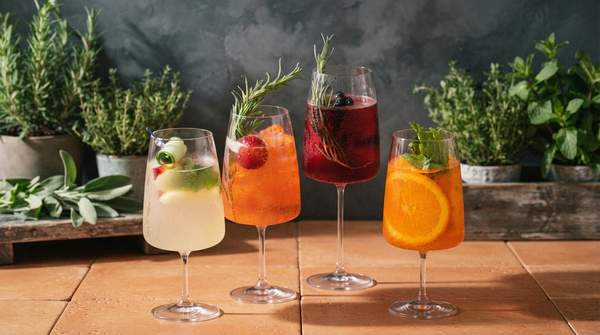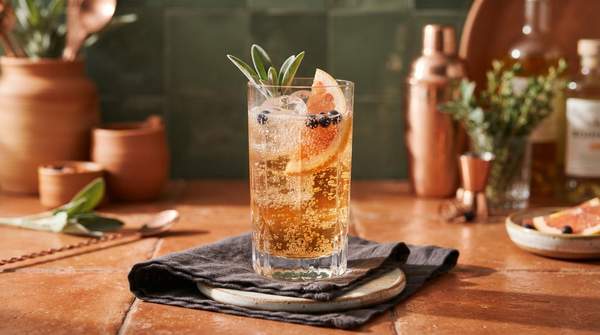
Carbonation does far more than add sparkle. It is a perceptual tool that changes how sweet, sour, and aromatic a drink seems, and different levels and bubble sizes produce distinctly different textures. Research on taste receptors shows that the familiar "bite" of a fizzy drink is a genuine physiological response, while sensory studies of consumers confirm that bite, cooling, and fizziness are central to how carbonated beverages are judged. For the home bartender, that means the decision of how much fizz—and what kind of fizz—is a flavor decision, not just a texture garnish.
The Science of Fizz: How Carbonation Transforms Drinks
Carbonation alters a beverage through three separate channels, and it is worth keeping them distinct. First, it modulates taste perception itself—most notably sweetness, which carbonation reliably makes feel less intense. Second, it creates physical sensations: the prickling, tingling, and creamy or sharp textures that consumers describe as mouthfeel. Third, it changes how volatile aroma compounds behave in the nose, brightening and lifting the scents that carry much of a drink's character. A peer-reviewed summary of brain imaging work found that carbonation and sourness, though sensed by overlapping machinery, activate different regions of the anterior insula—and that carbon dioxide measurably reduces sweetness perception rather than working through sour receptors. None of this adds flavor in the literal sense; as craft soda makers put it, carbonation amplifies contrasts that are already in the glass.
Taste Modulation: Sweetness, Sourness, and the 'Bite'
The reduction of perceived sweetness is the best-documented effect. A highly carbonated drink tastes less sweet than the same drink with less fizz, even when sweetened identically, because carbonation lifts the sweetener off the palate quickly before it can linger. Crucially, this is a perceptual modulation, not a chemical change—the sugar is still there in full measure. Neuroimaging evidence adds that the effect may interact with brain reward systems, which vary between natural and artificial sweeteners. Meanwhile, work from Charles Zuker's laboratory at Columbia, published in Science, identified carbonic anhydrase 4—an enzyme anchored to sour-sensing taste cells—as the principal CO2 taste sensor, converting dissolved CO2 into carbonic acid and triggering a dose-dependent neural response. That pathway is why the carbonation "bite" is a distinct physiological event, separate from general acidity, even though the same sour-sensing cells are involved.