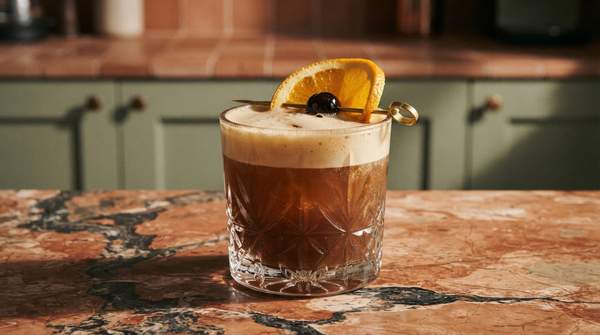
A great non-alcoholic cocktail comes down to one skill: balancing the five basic tastes—sweet, salty, sour, bitter, and umami—so that no single flavor dominates. Mixology educator Chris Tunstall of A Bar Above defines balance exactly this way, as the interplay between those five elements, with multiple ingredients used in proportion so the drink never tastes one-dimensional. Once you understand which ingredients deliver each taste, you can stop following recipes and start composing your own.
The Foundation of Flavor: Understanding the Five Core Tastes
Alcohol normally contributes flavor, body, and bitterness to a cocktail, so a zero-proof version has to rebuild that complexity through other means. The Simple Goodness Sisters, who write a recipe formula for non-alcoholic drinks, describe the essential building blocks as sweet, sour, bitter, and spirit, with ice or water as the dilution that blends and mellows everything together. In their framework, a drink needs at least two of those components to count as a cocktail, but the best ones contain at least three for a rounded, complete flavor experience.
The push and pull between contrasting flavors is what makes this work. Our tongues, as the Simple Goodness Sisters put it, love contrast, and that contrast is necessary to achieve balance. De Soi, a maker of non-alcoholic aperitifs, makes the same point about the triad of sweet, sour, and bitter: the right balance ensures no single taste overwhelms the others, creating a harmonious blend that improves drinkability.
Your Flavor Palette: Ingredients for Each Core Taste
Use this table as a working palette. Before you build a drink, pick at least one ingredient from each column you want to feature, then adjust proportions until no single taste dominates.
| Taste | Ingredient examples | Role in the drink |
|---|---|---|
| Sweet | Flavored syrups such as blueberry lavender; apple juice; pear juice; natural sweeteners | Harmonizes the other elements; layered fruit flavors from multiple juices or purees create more interest than single-note sweetness |
| Sour | Fresh-squeezed lime juice; fresh-squeezed lemon juice; fermented ingredients like kombucha or shrubs | Adds bright acidity and vibrancy; the counterweight to sweetness |
| Bitter | Botanical teas and herb infusions; aperitif-style bitter ingredients | Provides depth and complexity; replaces the bitterness alcohol normally supplies |
| Salty | Saline and savory seasonings | One of the five basic taste elements that contributes to overall balance |
| Umami | Savory, fermented ingredients | One of the five basic taste elements that contributes to overall balance |
Two honest caveats about the last two rows: the sources establish salty and umami as core taste elements in a balanced drink, but they do not name specific ingredients for them, so treat those cells as a category to experiment with rather than a tested shopping list. The bitter row draws on the same principle—botanical teas, herb infusions, and aperitif-style ingredients supply the aromatic depth and bitterness that alcohol would otherwise provide.
Sweetness: The Harmonizer
Sweetness is the glue of a mocktail, but the evidence is clear that how you sweeten matters as much as how much. A beverage textbook from Nicolet College's bartending program notes that multiple juices or purees create layered fruit flavors rather than single-note sweetness—combining apple, pear, and lemon juice produces more interest than apple juice alone. De Soi similarly recommends natural sweeteners that add necessary sweetness without overpowering.
In practice, that means reaching for a flavored syrup or a blend of two fruit juices instead of a single sweetener. A blueberry lavender syrup, for example, contributes sweetness plus a floral aromatic dimension in one pour, doing double duty in the flavor architecture.
Sourness: The Brightener
Sourness is what keeps a non-alcoholic drink from tasting like sweetened juice. Fresh citrus is the workhorse here: the Simple Goodness formula explicitly labels fresh-squeezed lime or lemon juice as the sour component of a drink. De Soi describes fresh citrus juices as introducing a bright acidity that lifts the whole glass.
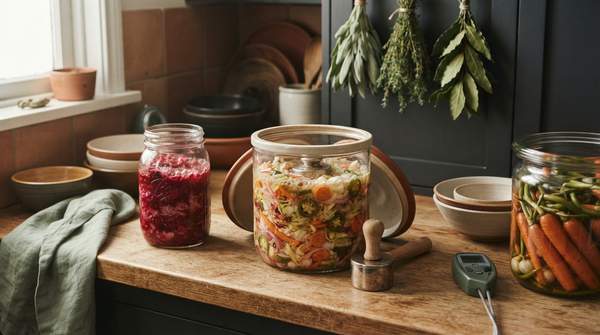
If you want sourness with more character, the Nicolet College text points to fermented ingredients like kombucha or shrubs, which bring acidity along with a funky edge. That funk is an asset, not a flaw—it adds a flavor dimension that plain lemon juice cannot, and it echoes the complexity that fermentation gives to wine and beer.
Bitterness: The Depth Provider
Bitterness is the taste most often missing from homemade mocktails, and it is the one that makes a drink taste grown-up. It is listed among the essential building blocks in the Simple Goodness formula, and De Soi treats the sweet-sour-bitter triangle as the key to beverages that delight the palate. Without a bitter element, a drink tends to read as flatly sweet-tart.
Herb infusions and botanical teas are the most accessible routes to bitterness and aromatic depth at the same time. Spices like ginger, cardamom, or cinnamon, as the Nicolet College text notes, contribute warming complexity that sits adjacent to bitterness and rounds out the middle of the palate.
Salty and Umami: The Savory Enhancers
These are the quietest elements in the framework, but Tunstall's guide counts both among the five basic tastes whose interplay defines balance. A small saline addition can sharpen the other flavors in a drink the way salt does in food, and umami can lend a savory depth that makes a zero-proof drink feel substantial rather than thin.
Because the supplied guidance names the categories without prescribing specific ingredients or proportions, this is the area where you should experiment most cautiously—start with tiny amounts and taste as you go. The principle is sound even where the shopping list is thin: a drink that engages salty and umami receptors has more dimensions than one that stops at sweet and sour.
Building a Balanced Drink: A Worked Example
The Simple Goodness Nonalcoholic Tequila Spritz shows the framework in action. Its components map cleanly onto the model: one ounce of blueberry lavender syrup serves as the sweet and floral component, half an ounce of fresh-squeezed lime or lemon juice is the sour component, one ounce of alcohol-free tequila is the spirit component, and four ounces of club soda provides dilution—deliberately larger because the syrup and lime proportions are larger too.
Notice what the recipe teaches. The spirit component supplies body and character that plain soda lacks; the dilution is proportioned to the stronger flavors rather than fixed; and the garnishes—a floral sugar rim and fresh blueberries—add color, texture, and an aromatic first impression. That is three building blocks plus dilution, exactly the "at least three" threshold the formula recommends for the most rounded flavor experience.
Beyond Taste: Adding Texture and Aroma for Full Complexity
Taste is only part of the equation. The Nicolet College text emphasizes building drinks with multiple flavor dimensions—aromatic depth from herb infusions and botanical teas, warming complexity from spices, and funk from fermentation. Tunstall adds that complexity comes from flavors and aromas that either blend harmoniously or provide an exciting contrast, and that we drink with our eyes first, so garnish, ice, and glassware matter.
Technique shapes texture as well. De Soi notes that shaking aerates a drink for a light, frothy consistency, while stirring suits layered drinks where you want minimal dilution and clarity. Choose shaking for citrus-heavy drinks that benefit from airiness; choose stirring when you want to preserve the strength of the underlying flavors.
Crafting Your Signature Sip: A Practical Approach
To create a balanced non-alcoholic cocktail, intentionally select ingredients that address each of the five core taste profiles—sweet, sour, bitter, salty, umami—using a spirit component for body and dilution for integration. Start with a sweet element and a sour element in roughly the spritz's proportions, add a bitter or aromatic layer, then experiment with small savory additions.
You will know it works when the drink exhibits a harmonious interplay of sweet, sour, and bitter notes, with subtle savory depth, and a distinct, complex flavor that is not watered down. That is the measurable test: if the drink tastes like diluted juice or a weak hint of something in soda water, rebalance toward contrast; if no single taste dominates and the flavor reads as distinct, you have built a cocktail rather than a mixture.