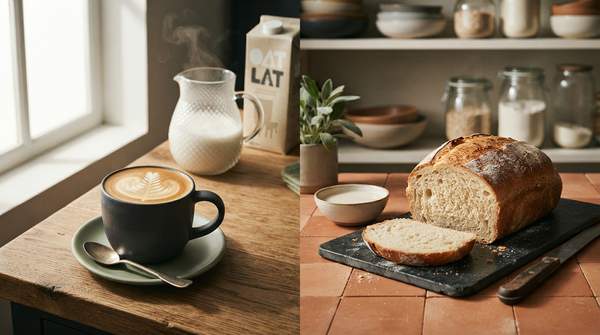
If you want one carton that does everything, oat milk—preferably a barista blend—is your best bet for coffee, while soy milk is the closest thing to whole milk in the oven. That is the short version of what happens when you line up five common plant milks against three very different jobs: frothing for coffee, baking, and savory cooking. Oat wins the espresso machine, soy wins the bread pan, and almond, despite its popularity, struggles in both.
Most plant milk guides stop at the coffee cup. But a milk that steams beautifully can still let your cake collapse, and a milk that bakes well can taste odd in a creamy soup. The comparison below pulls together frothing evaluations from coffee specialists, structured baking trials, and flavor guidance so you can match the carton to the recipe—not the other way around.
Choosing Your Plant-Based Milk: Beyond the Coffee Cup
Plant milks are not interchangeable, and the differences show up fast when you push them beyond a splash in tea. Veganuary's guide to plant milks for coffee puts it plainly: oat milk is "generally the best all-rounder for coffee, especially barista blends," soya is "a solid match for texture and protein content," while almond and coconut "work better in black, iced or flavoured coffee."
In the kitchen, those same personalities persist. King Arthur Baking's PJ Hamel ran structured baking trials with soy, pea protein, almond, oat, coconut (from the dairy case, not canned), and cashew milks, evaluating each for rise, texture, mouthfeel, flavor, and browning. The results diverged sharply from what coffee-focused testing would predict—which is exactly why a single-purpose recommendation can mislead you at the grocery store.
The Science Behind Plant Milk Performance: Protein and Fat
Two components do most of the work: protein and fat. Protein stabilizes foam, which is why dairy milk—protein-rich—froths so reliably. Fat contributes body and the creamy mouthfeel that makes a latte feel indulgent rather than watery. Get the balance right and a plant milk behaves like cow's milk; get it wrong and you get thin foam that collapses or coffee that tastes diluted.
As Veganuary explains of barista oat blends, "the fat and protein balance gives you the steam and froth you'd get from cow's milk." That formulation is the whole reason "barista edition" cartons exist: they are built for texture retention under heat and steam, not for pouring over cereal. In baking, protein plays a different structural role, helping set crumb and support rise—which is why low-protein milks can leave baked goods fragile.
One caution from the frothing tests: protein is not the whole story. Urnex's home-frothing review found that a low-protein milk (in that case, a pistachio milk) steamed surprisingly well, defying the expectation that "low protein content [would] affect its ability to steam." Fat content and processing additives clearly matter too, so treat protein as a strong predictor, not a guarantee.