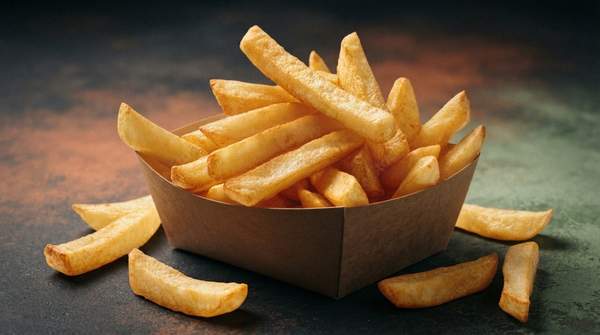
Crispiness is not luck. It is the predictable result of managing three things: getting moisture out of the food's surface fast, giving that surface a rigid structure to dry into, and applying enough heat for browning reactions to finish the job. When your fries slump, your chicken skin flops, or your roasted potatoes stay pale, one of those three controls has slipped. Here is the science behind each one, and a diagnostic framework for finding which one failed.
The Science of Crispiness: More Than Just a Crunch
Start with a distinction most cooks blur. Writing on food texture measurement, the texture-analysis specialists at Stable Micro Systems distinguish crispy from crunchy: crispiness is a surface phenomenon, "a result of the food's surface being subjected to high heat, resulting in a rapid dehydration and browning (like in frying or baking)," while crunchiness lives deeper in the food's structure, in things like raw carrots or thick-cut chips. This matters practically. Crispiness is a thin, dry, brittle layer sitting on top of something — and that means it is something you build deliberately at the surface, not something you hope for from the whole ingredient.
That layer forms when three processes line up: water leaves the surface quickly, the remaining structure sets rigid and dry, and heat browns it into the hard, crackly finish we recognize as "done." Miss any one of the three, and you get soggy, greasy, or pale food.
Pillar 1: Rapid Moisture Removal for a Dry Surface
Everything begins with evaporation. When food hits hot oil or a hot oven, water at the surface flashes off, and what remains behind is the dry crust you are after. Industry guidance on deep-frying technique from Restaurant Technologies is blunt about the failure mode: "If too much moisture is present, it creates steam, which prevents the surface from crisping properly and can lead to soggy, greasy food."
The fix happens before cooking ever starts. Pat ingredients dry with a towel, or let them air-dry for a few minutes — a step that applies whether you are frying or roasting. Excess surface moisture does double damage: it blocks crisping, and in a fryer it causes splattering. In baking, the same principle explains geometry: because moisture must travel out of the food, thin biscuits and thin-cut pieces crisp more easily than thick ones, since water has a shorter distance to escape.