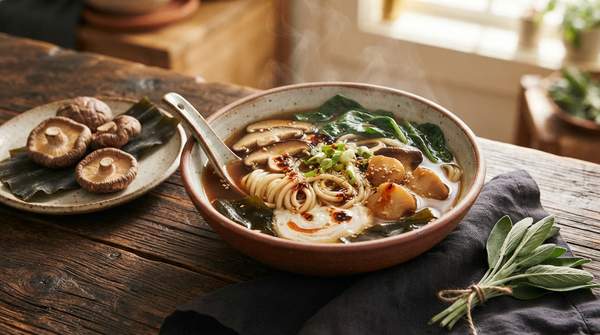
If your weeknight plant-based meals keep tasting like something is missing, the fix is usually umami — the savory fifth taste that meat and aged cheese normally supply. Five ingredients reliably fill that gap: mushrooms, tomatoes, nutritional yeast, miso and soy sauce, plus seaweed as a supporting player. Here is what each one actually tastes like, why it works, and how to get the most out of it.
The Savory Secret: Understanding Plant-Based Umami
Umami is one of the five basic tastes, alongside sweet, salty, sour and bitter, and it is what gives food a decadent, savory character. The Monday Campaigns, which advocates for plant-forward cooking, describes it as the reason many favorite ingredients taste so good — and notes that because meat and aged cheese are the usual sources, fortifying plant-based dishes with umami makes them more satisfying to all eaters.
The mechanism matters for cooks. Registered dietitian Theresa Hedrick explains that umami taste is triggered by glutamate, an amino acid, along with certain nucleotides like inosinate and guanylate. The Umami Information Center, a food-science organization, adds a crucial detail: inosinate comes mainly from meat and fish, but guanylate is abundant in the mushroom family, especially dried shiitake. That is why mushrooms, uniquely among vegetables, can approach the savory depth of animal products.
Practically, umami does three jobs at once. Writing for Forks Over Knives, Courtney Davison notes that umami-rich ingredients lend a meaty flavor without meat, provide a well-seasoned sensation without added salt, and balance other tastes without relying on fat. Hedrick makes the same point from a health angle: increasing umami can help reduce the need for salt, and it eliminates that sense of "something is missing" common in vegetarian and vegan cooking.
Key Plant-Based Umami Sources for Your Kitchen
Mushrooms. With their unctuous, meaty texture and deep savoriness, mushrooms are the closest plant swap for beef, lamb or chicken. Not all varieties are equal: shimeji, enoki and shiitake mushrooms pack the most umami punch, per Hedrick, with common button mushrooms and truffles also good sources. Dried shiitake is the standout — drying concentrates their umami to roughly fifteen times that of fresh shiitake. Rehydrate them for soups, add them to tofu scrambles and tacos, or use them as the centerpiece of the plate; The Monday Campaigns even suggests them in eggplant-and-shiitake "meatballs."
Tomatoes. Among vegetables, tomatoes rank among the highest plant-based umami sources, delivering a sweet, juicy savoriness that rounds out other flavors in a dish. The Umami Information Center finds that their glutamate peaks when tomatoes turn very red — so the riper and redder, the better.
Nutritional yeast. The drying process used to make those flaky yellow bits breaks down yeast proteins into amino acids including glutamic acid, which is exactly why they taste nutty and cheesy. Both Forks Over Knives and Meatless Monday recommend it as the go-to plant-based stand-in for aged cheeses like Parmesan — scattered over scrambles or blended into cashew cheese dips.
Fermented soy: miso, soy sauce and tamari. Fermentation breaks down soy proteins and frees the glutamate responsible for umami, which is why miso and soy sauce are such concentrated sources. Miso paste — made by salting and fermenting soybeans — is mellower than you might expect, especially lighter-colored varieties, and it slides easily into dips, stews, soups, marinades, dressings and sauces. Soy sauce and tamari are salty, yeasty and loaded with umami.
Seaweed. Sea vegetables are where umami research first began, and nearly all types are high in glutamates — Forks Over Knives notes wakame as the exception. The Monday Campaigns suggests dry seaweed for stocks or as a wrapper for sushi and tacos, and fresh seaweed sautéed, fried, or added to salads.