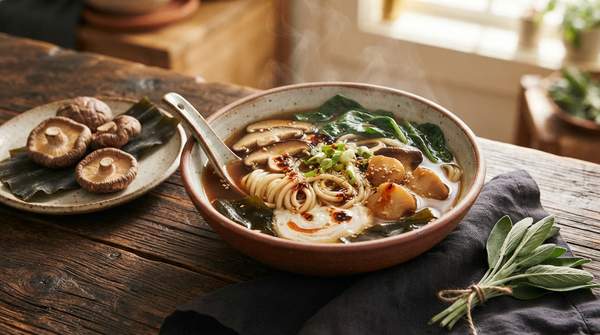
Deep, savory, "where did that come from?" flavor in vegan food doesn't come from a single magic ingredient — it comes from layering. Professional chefs develop umami through technique as much as ingredients, and the same approach works in any home kitchen. This guide gives you a repeatable five-stage framework: choose a base, add a primary umami source, layer a secondary booster, apply a flavor-transforming technique, and finish with a concentrated touch. No meat, no bones, no mystery.
The Foundation of Umami in Plant-Based Cooking
Umami is the fifth basic taste, alongside sweet, sour, bitter and salty. As registered dietitian and vegan cooking writer Nicole Axworthy of Delish Knowledge explains, umami is essentially the "meaty" flavor of food — it spreads across the tongue, lingers longer than other tastes, and promotes salivation, which is why food without it so often feels like "something is missing." The taste is carried largely by glutamate, a naturally occurring amino acid, and the problem in plant-based cooking is that many vegan ingredients have high water content and little fat, so their flavor can read as thin unless you deliberately intensify it.
That's why method matters more than a shopping list. As a YUMYUM SEASONING piece on meat-free umami puts it, the problem with most vegan umami lists "is they hand you the shopping list and skip the method" — mushrooms sitting in your pantry flavor nothing on their own. Lindsay D. Mattison, writing for Taste of Home, frames the solution the way professional cooks do: coaxing maximum flavor from plants "is all about building layers of flavors," starting with ingredients like beans, tomatoes, mushrooms, peas, corn, tofu or tempeh, then adding boosters as you cook so the ingredients work together into complexity.
The Vegan Umami Toolkit: Key Ingredients and Their Profiles
Different plant-based umami sources contribute different characters, and knowing each one's profile lets you substitute and combine with intent rather than guesswork.
- Fermented (miso paste): One vegetarian chef quoted in Epicurious describes adding "a dab of miso paste" to all kinds of dishes — not just Japanese ones — for "a nice background richness — almost cheesiness." It melts quietly into soups, braises and sauces rather than announcing itself.
- Vegetables (mushrooms, tomatoes, peas, corn): These are the natural core sources. Tomatoes, mushrooms and seaweed are all high in glutamate, and — as Amanda Cohen of Dirt Candy notes in the same Epicurious piece — umami "just accentuates the flavors that are already there," which is why concentrating vegetables matters so much.
- Earthy aromatics (turmeric, garlic, olives): Slowly sautéing an ingredient lightly dusted with turmeric in neutral oil, as one Epicurious contributor recommends, lets its "rich, earthy flavor permeate the fat" and build extra levels without dominating. Olives simmered into vegetable stock add "a huge amount of umami."
- Concentrated powders and yeasts: Nutritional yeast is a naturally umami-rich vegan staple, and dried shiitake or mushroom powder delivers an intense, final savory hit.