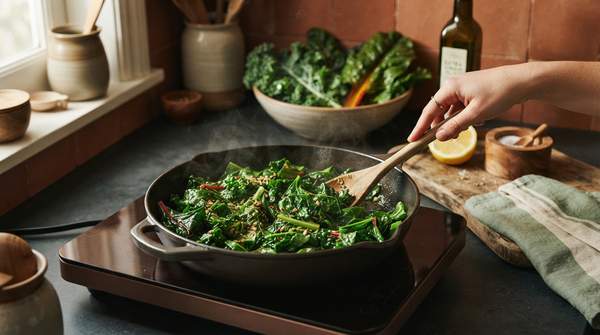
The short answer: steaming and quick stir-frying are your best bets for keeping vitamin C, while boiling trades away that water-soluble vitamin in exchange for leaving fat-soluble beta-carotene largely intact in the leaves. As Michael Greger notes in his NutritionFacts.org coverage of the research, even blanching spinach for just five minutes can cut its vitamin C by more than half. The method you pick should follow the nutrient you actually care about — and that choice is easier once you understand why vitamins behave so differently in a hot pan or pot.
Understanding Nutrient Trade-offs in Leafy Greens
Leafy greens carry two broad families of nutrients that respond to heat in opposing ways, and this is the principle behind every recommendation that follows. Water-soluble vitamins like vitamin C dissolve into the cooking liquid and are also heat-sensitive, so they can leak out of the leaves and degrade under prolonged cooking. Fat-soluble nutrients such as beta-carotene behave differently: they stay put in the leaf tissue, and heat can actually make them easier for your body to absorb.
A review of vitamin retention in cooked vegetables, published in the PMC research collection, puts it plainly: cooking with heat treatments like steaming, blanching, boiling, and microwaving "can have a significant impact on the content of vitamins," and ignoring this can lead to a badly inaccurate estimate of what you're actually eating. The same review-driven coverage at Nutrition Health Review captures the flip side: while cooking "can destroy or greatly reduce certain water-soluble and heat-sensitive nutrients," it "can also enhance or increase availability of heat-tolerant or fat-soluble nutrients, such as beta-carotene." So no method is simply "good" or "bad" — each one spends and saves nutrients differently.
Cooking Methods and Nutrient Retention in Leafy Greens
Here is the at-a-glance comparison. Each row contrasts a method's documented effect on water-soluble vitamin C against its effect on fat-soluble beta-carotene, so you can match the method to your nutritional goal before you turn on the stove.
| Cooking Method | Effect on Water-Soluble Vitamins (Vitamin C) | Effect on Fat-Soluble Vitamins (Beta-Carotene) | Key Takeaway |
|---|---|---|---|
| Boiling / Blanching | Significant loss, mainly by leaching into the water. In spinach, blanching for five minutes cuts vitamin C by more than half; after 15 minutes, more than 90 percent has dissolved into the water. Collards, which start far richer in vitamin C, still retain high absolute levels after ten minutes of boiling. | Largely retained — most beta-carotene tends to stay in the leaves, and cooking can increase its bioavailability. | Acceptable if you keep time short or use the cooking liquid; worst standalone choice for vitamin C. |
| Steaming | Better retained than with boiling because the greens touch less water, though steaming spinach still significantly diminishes its vitamin C content. | Bioavailability increases, as it does with cooking generally. | The gentlest water-based option; the strongest choice when you want to protect vitamin C as much as possible. |
| Stir-Frying | Helps preserve vitamin C relative to methods with more water and longer times, thanks to shorter cooking and little or no leaching liquid. | Bioavailability is enhanced by cooking, and the presence of oil further aids absorption of fat-soluble vitamins. | The best of both worlds when time is short and heat is high but brief. |
Reading the table this way reveals the pattern: the variable that matters most for vitamin C is contact with water and total cooking time, while beta-carotene rewards you for cooking the greens at all — especially alongside a little fat.