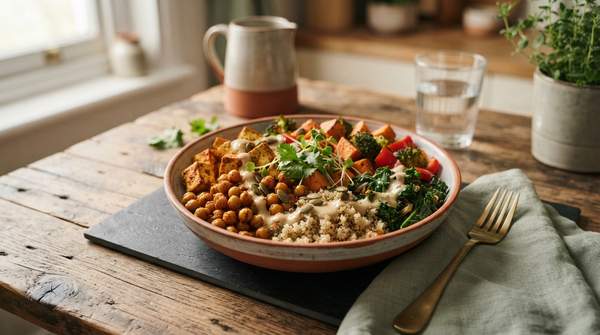
You don't need a new recipe every night. What you need is a repeatable structure: pick a whole grain base, add a plant protein, pile on vegetables, and finish with a flavor booster. That four-part method, drawn from guidance on balanced plant-based eating, turns whatever is in your pantry and fridge into a satisfying weeknight dinner — and it works whether tonight's format is a grain bowl, tacos, or a simmering lentil stew.
The 4-Part Framework for Balanced Plant-Based Meals
The secret to a nourishing plant-based meal isn't complicated recipes — it's ingredient balance, as the team at Eat Forage puts it. A healthy meal combines a few simple components that work together to create flavor, texture, and lasting energy. Instead of asking "what should I cook tonight?", you ask four smaller questions: what grain, what protein, what vegetables, and what sauce or topping pulls it all together. Each component has a distinct nutritional job, and when all four are present, the plate tends to feel nourishing rather than restrictive.
Component 1: Whole Grain Base
The grain is the filling foundation of the meal. Options like black rice, quinoa, or farro add a nutty flavor, pair well with vegetables, and provide sustained energy, according to Eat Forage's breakdown of balanced meals. Whole grains and seeds are also cited as sources of lasting energy in plant-based meal planning guidance from RAWVOLUTION. Practically, this means cooking a pot of brown rice, quinoa, farro, or whole-wheat pasta early in the week and reaching for it as meals come together. The base doesn't need to dominate the plate — it just needs to be there, anchoring everything else.
Component 2: Power-Packed Plant Protein
Protein is what keeps you full. Plant proteins from chickpeas, lentils, tofu, tempeh, or beans help increase satiety and support muscle health, Eat Forage notes. If you prefer whole foods over processed alternatives, the solution is simple, writes Kathy Patalsky at Healthy Happy Life: "beans, lentils, tofu, tempeh, nuts, and seeds." Her broader advice is to choose protein-rich plant foods and let the fiber take care of itself, since legumes deliver both at once. Rotating through different sources over the week keeps meals interesting and varies the nutrients on your plate.