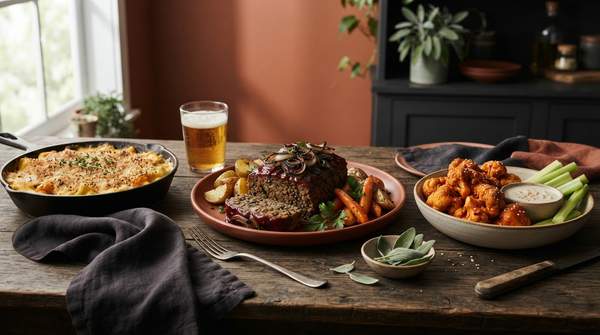
The right plant-based swap depends on what you're replacing. For dense, sliceable "meatloaf," lentils build the cohesive body; chickpeas give a softer, crumblier base. For tender "wings," roasted cauliflower does the work. For creamy sauces, pureed starchy vegetables, cashews, and even arborio rice deliver richness no dairy required. This guide compares the most common swaps across three comfort-food categories and explains the culinary principles behind them, so you can pick the ingredient that matches the texture and flavor you're chasing.
Recreating 'Meaty' Textures: Lentils, Chickpeas, and More
The Monday Campaigns' swap guide points to a chickpea-based vegan meatloaf from Nora Cooks as a way to "mimic the density and richness of traditional meatloaf." Chickpeas mash into a softer, more crumbly base — good for a tender loaf, less ideal when you want tight slices. If density is the goal, lentils are the stronger choice: Minimalist Baker's lentil "meat" loaf combines lentils with nuts, sweet potato, and mushrooms into a cohesive, hearty entrée, and the same site's lentil Bolognese swap replaces ground beef with lentils for a hearty one-pot sauce.
Texture can be refined further with binding agents and cooking method — the legume is the foundation, not the whole story. For burgers, a different route entirely: grilled portobello mushrooms, marinated in barbecue spices and grilled until tender, offer a juicy, whole-cap alternative to ground beef patties. Mushrooms also carry savory depth, which helps the "meaty" impression land.
Crafting Crispy & Tender 'Fried' Favorites with Plants
For Buffalo wings, the go-to swap is cauliflower. The Monday Campaigns' cauliflower Buffalo wing recipe captures "the spicy kick of Buffalo wings without the bones (and the chicken)," and the preparation method matters: roasted or baked florets come out tender, mimicking the interior of a wing. That tenderness is what the evidence supports — a genuinely crispy exterior would require specific breading and frying or baking techniques beyond what these recipes describe.
The principle here is that the sauce and the eating experience carry much of the dish. Buffalo sauce delivers the heat and tang; the cauliflower is the vehicle. The same logic applies across fried favorites: choose a vegetable whose interior texture approximates the original, then lean on the coating and sauce for the flavor signature.
Achieving Dairy-Free Creaminess and Richness
Creaminess without dairy comes from several directions. Writing for the Center for Science in the Public Interest, M.M. Bailey recommends silken tofu for dairy-free cream sauces, and tahini, avocado, mayonnaise, or plant-based yogurt for dressings — with the caveat that yogurt works best in uncooked sauces. A key technique: whisking an oil or fat into a thick base like mustard, miso paste, tomato paste, or a vegetable purée produces a sauce that "stays velvety and emulsified."
Other routes to richness include pureed starchy vegetables — potatoes, carrots, squash — plus cashews and coconut milk, which VegKit.com highlights alongside pantry seasonings for recreating dairy's creaminess. Arborio rice offers its own trick: the starch it releases during slow cooking builds a naturally creamy base, which is why Minimalist Baker's mushroom and leek risotto reads as "creamy, savory, and the ultimate plant-based comfort food." For a stroganoff-style dish, baby portobello mushrooms, soy sauce, and plant-based sour cream together mimic the flavor, texture, and creaminess of the beef original.
The Art of Umami: Building Deep Savory Flavors
What makes comfort food taste comforting is often umami. Bailey's dairy-free cooking guide lists soy sauce, tomato paste, mushrooms, and miso as the umami workhorses, alongside garlic, herbs, and citrus for building flavor in naturally dairy-free meals. These ingredients do the job that meat drippings and cheese normally do: they add savory depth and that satisfying, mouth-filling quality.
The Monday Campaigns frames the philosophy well: it's "usually not the animal protein that makes a dish unique or exquisite, but rather the harmony of ingredients and specific techniques." A lentil Bolognese works not because lentils taste like beef but because tomato, aromatics, and seasoning create the familiar harmony. Layer umami builders deliberately — miso in the loaf, soy sauce in the stroganoff, tomato paste in the meatballs — and the dish reads as deeply savory even without meat.
Your Guide to Plant-Based Comfort Food Swaps
The table below compares the main swap options across the three comfort-food archetypes, showing what each ingredient contributes and where its limits are.
| Classic Dish Category | Primary Swap Ingredient(s) | Texture Replication | Key Flavor Contribution |
|---|---|---|---|
| Meaty dishes (meatloaf, burgers, Bolognese) | Lentils, chickpeas, nuts, sweet potato, mushrooms; portobello caps for burgers | Lentils create a dense, cohesive loaf; chickpeas give a softer, crumblier base; texture refined with binders and cooking method | Umami builders — mushrooms, soy sauce, miso, tomato paste — add savory depth alongside aromatics and spices |
| Fried dishes (wings) | Cauliflower florets | Roasted or baked florets are tender, mimicking a wing's interior; crispiness would require breading and frying/baking techniques not detailed in these recipes | Buffalo sauce supplies the heat and tang; the vegetable is the vehicle |
| Creamy dishes (soups, sauces, pastas) | Silken tofu, cashews, coconut milk, pureed starchy vegetables (potato, carrot, squash, pumpkin), arborio rice, plant-based milks and sour cream | Purees and cashews create smooth, thick textures; whisking oil into a thick base (miso, tomato paste, purée) keeps sauces velvety and emulsified | Coconut milk adds richness; pureed vegetables contribute subtle sweetness or earthiness; herbs, spices, and umami ingredients round it out |
Use it this way: start from the texture you need — dense and sliceable, tender, or velvety — then pick the ingredient that produces it, and layer the flavor contributors on top.
Mastering Plant-Based Comfort: Your Next Steps
Choose plant-based ingredients based on their specific textural and flavor contributions to best replicate classic comfort foods. Lentils when you want a loaf that slices; chickpeas when you want something softer; cauliflower for tender "wings"; purees, cashews, or silken tofu for creaminess; mushrooms, miso, and soy sauce for the savory depth. The measurable indicator of success: successfully prepared plant-based comfort dishes that satisfy cravings for traditional textures — a dense "meatloaf," tender "wings," creamy sauces — and rich, savory flavors. Start with one dish, note whether the texture lands where you wanted, and adjust the base ingredient or binder next time.
Sources
- Plant-Based Swaps to Recreate Classic Comfort Food Dishes — The Monday Campaigns
- 42 Plant-Based Comfort Food Recipes — Minimalist Baker
- Dairy-free recipes: 17 rich & creamy plant-based dishes — VegKit.com
- Dairy-free recipes, cooking tips, and swaps — Center for Science in the Public Interest